Sous vide cooking has taken the culinary world by storm, and for good reason. Imagine perfectly cooked chicken breast that’s juicy, tender, and bursting with flavor—no more dry, rubbery disasters. But wait, how long does it actually take to achieve this poultry perfection?
Understanding Sous Vide Cooking
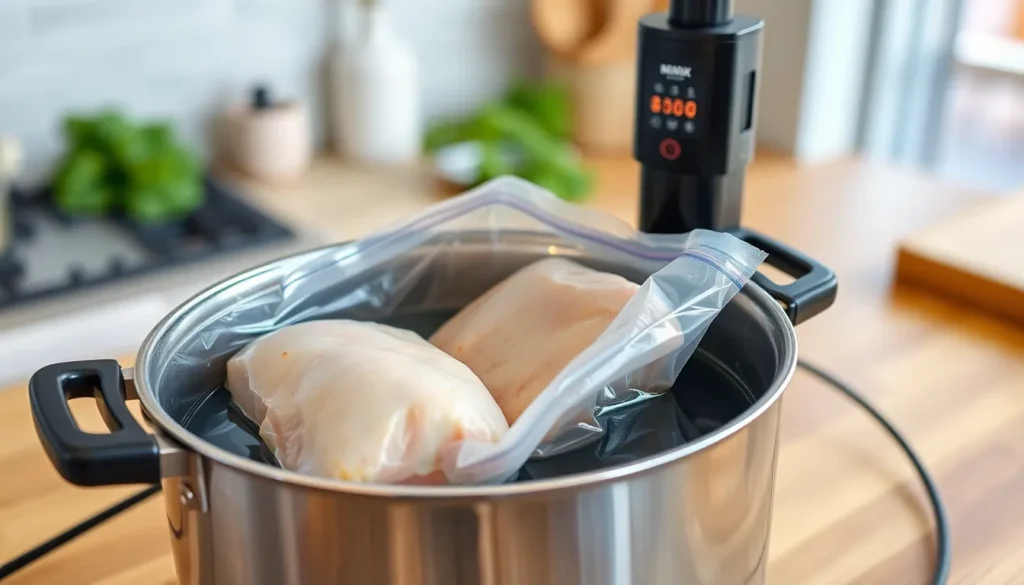
Sous vide cooking has gained momentum due to its unique approach to preparing food. This technique involves sealing food in vacuum-sealed bags and immersing it in a water bath, providing precise temperature control.
What Is Sous Vide?
Sous vide translates to “under vacuum” in French. It involves cooking food at a consistent low temperature for extended periods. By using this method, proteins cook evenly, ensuring they reach the desired doneness without overcooking. Cooking chicken breast sous vide allows it to maintain moisture while enhancing flavor, resulting in tender and juicy meat.
Benefits of Sous Vide Cooking
Sous vide cooking presents multiple advantages. First, it guarantees precision in temperature control, reducing the risk of overcooking. Second, this method retains essential nutrients and flavor, delivering a superior taste compared to traditional cooking techniques. Third, flexibility in meal preparation allows for longer cooking times, enabling chefs to focus on other tasks without constant monitoring. Finally, sous vide ensures food safety by cooking at low temperatures for extended periods, effectively eliminating harmful bacteria.
The Science Behind Sous Vide Chicken
Sous vide cooking revolutionizes the way chicken breast is prepared, focusing on precise heat application. Understanding how heat and time interact affects the outcome significantly.
How Heat and Time Affect Chicken Breast
Heat activates proteins in chicken breast. Timing influences the texture and moisture levels. Cooking at lower temperatures for longer periods leads to tender results. For example, cooking chicken at 140°F for 1.5 hours keeps it juicy and tender. Conversely, cooking it at higher temperatures can result in a drier product. Optimal texture occurs when the cooking time aligns with the specific temperature, ensuring even doneness throughout.
Optimal Cooking Temperatures
Cooking chicken breast requires specific temperature settings for the best results. Generally, temperatures between 140°F and 160°F are favorable. Cooking at 140°F for 1.5 to 4 hours produces tender chicken, while 150°F enhances firmness without drying. At 160°F, cooking can take 1 to 2 hours, ensuring thorough pasteurization. Each temperature provides a unique flavor profile and texture, allowing for flexibility in meal preparation. This control over temperature guarantees perfectly cooked chicken every time.
How Long to Sous Vide Chicken Breast
Sous vide cooking allows for precise temperature control, making it an ideal method for chicken breast. Timing plays a crucial role in achieving the perfect texture and flavor.
Recommended Time Ranges
Cooking chicken breast at 140°F takes approximately 1.5 hours for tender, juicy meat. Increasing the temperature to 150°F shortens the cooking time to about 1 hour, while 160°F requires only 45 minutes. These time ranges ensure optimal doneness and flavor without risking dryness. Chefs often choose a temperature based on personal preference, balancing tenderness and texture.
Factors That Influence Cooking Time
Multiple factors affect sous vide chicken cooking time. Thickness significantly impacts how long the chicken should remain in the water bath. For instance, thicker cuts require extended cooking to reach the desired internal temperature. Additionally, the accuracy of the water temperature also matters. Variations can lead to longer cooking times than expected. Lastly, the amount of food in the water bath can influence heat distribution, affecting how quickly everything cooks.
Tips for Perfectly Cooked Chicken Breast
Achieving perfectly cooked chicken breast involves careful preparation and thoughtful seasoning. These steps enhance the sous vide experience.
Preparing the Chicken for Sous Vide
First, chicken breast must be properly trimmed to remove excess fat and connective tissue. Cleaning the surface helps ensure better flavor. Vacuum-sealing the chicken prevents water from entering, making it essential for sous vide success. A quality vacuum-sealer keeps the chicken intact during the cooking process. Thickness matters; thicker pieces require longer cooking times to ensure even doneness. Consider using a poultry-safe bag that can withstand high temperatures. Each step in preparation impacts the final result.
Seasoning and Flavoring Options
Flavoring the chicken breast opens endless possibilities. Salt and pepper serve as a simple yet effective base. Marinades enhance taste, with options like citrus, soy sauce, or garlic providing variety. Fresh herbs such as rosemary or thyme infuse extra aroma. For those seeking a spicy kick, crushed red pepper or smoked paprika adds depth. Experimenting with different flavors can create unique experiences. Remember, seasoning greatly affects perceived quality; a well-seasoned chicken breast yields more satisfaction.
Sous vide cooking transforms the way chicken breast is prepared. By controlling temperature and time, it guarantees juicy and flavorful results every time. The flexibility in cooking times and temperatures allows home cooks to tailor their meals to personal preferences.
Experimenting with different seasonings and marinades can elevate the dish further. With the right techniques and attention to detail, anyone can master sous vide chicken breast. This cooking method not only enhances flavor but also ensures food safety and nutrient retention. Embracing sous vide is a step toward culinary excellence in the kitchen.